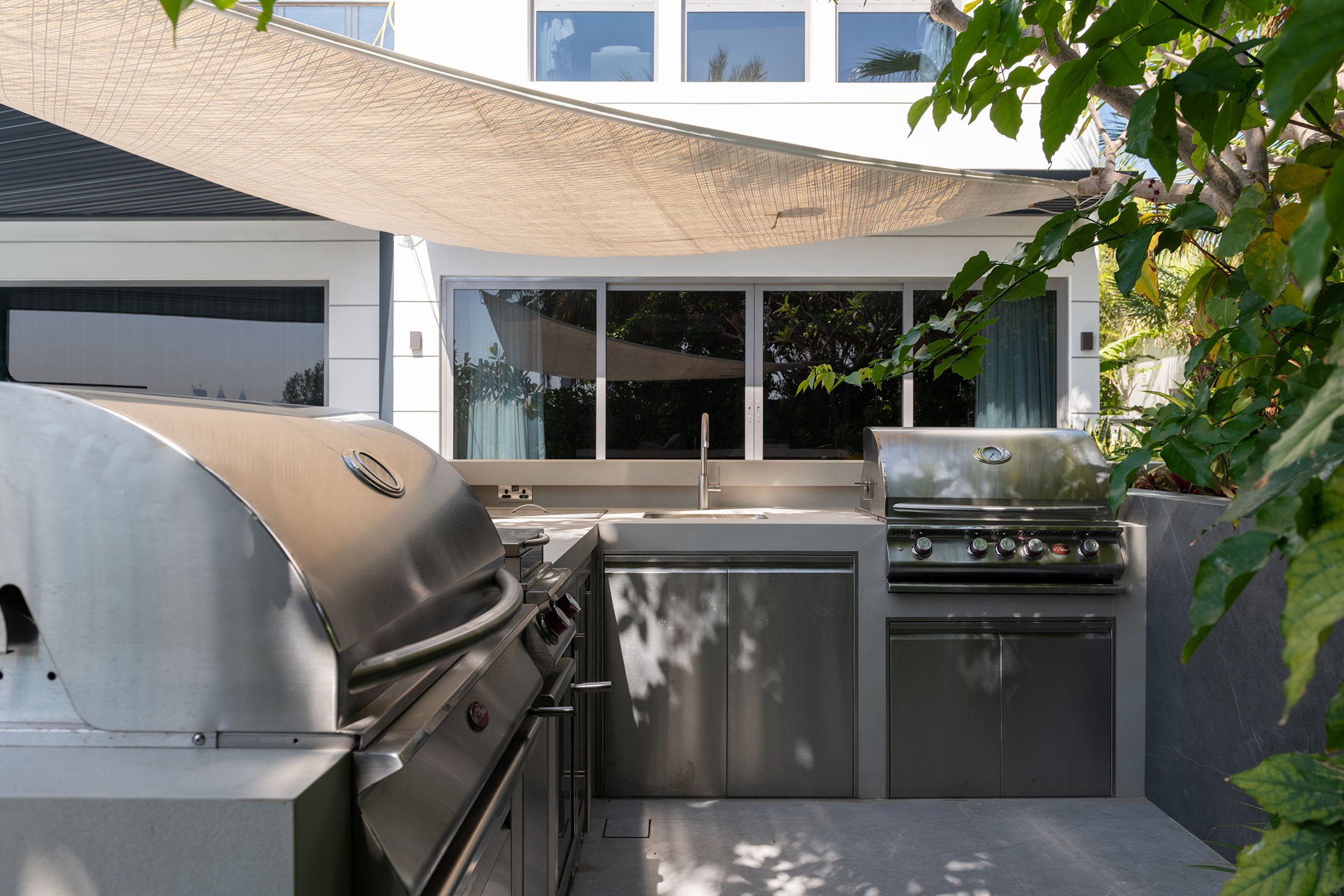
Landscape lighting adds both beauty and function to outdoor spaces. A carefully designed lighting plan highlights your property’s features, improves safety, and creates a welcoming atmosphere.
The following best practices can guide you in achieving the perfect landscape lighting design for your home.
Identify key features to highlight:
The first step in landscape lighting design is identifying the features you want to showcase. Focus on highlighting trees, architectural elements, statues, or water features. The goal is to create a balanced and visually appealing display of your outdoor area. Position lights to accentuate these features without overwhelming the space.
Use layers of light:
Using multiple layers of lighting helps create depth and dimension in your outdoor space. Combine different types of lighting such as ambient, task, and accent lighting. Ambient lighting provides overall illumination, while task lighting focuses on specific areas like paths or workspaces. Accent lighting is used to highlight focal points, such as sculptures or plants. By mixing these types, you can create a vigorous and inviting atmosphere.
Focus on lighting placement:
Proper placement of your landscape lights is essential to achieving an effective lighting design. Consider using uplights, downlights, or path lights depending on the feature being illuminated. Uplights can highlight trees or tall structures, while downlights can provide soft, even light over patios or seating areas. Path lights ensure walkways are well-lit for safety, while spotlights are perfect for highlighting specific focal points.
Choose the right light fixtures:
The light fixtures you choose will significantly impact the overall aesthetic of your landscape. Stainless steel or copper lights often complement modern designs, while traditional fixtures work better with classic or rustic landscapes. Consider the size of your fixtures in relation to the area you are lighting; large fixtures can overwhelm small spaces, while smaller lights may not provide enough illumination for larger areas.
Consider the light source:
LED lighting is an excellent choice for landscape lighting due to its energy efficiency and long lifespan. LEDs also produce less heat and are available in various colour temperatures, allowing you to select the right mood for your space. Warmer tones typically work well for creating a cosy and inviting environment, while cooler tones are suitable for modern or sleek outdoor settings.